Why Do Pet Snakes Refuse to Eat? Temperature, Environment, or Disease?

Sep 10, 2025 By

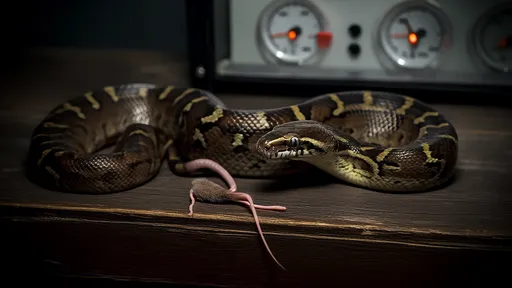
Snake ownership brings a unique set of challenges, and one of the most common and concerning issues keepers face is a sudden or prolonged refusal to eat. A snake pushing away its meal can be a source of significant anxiety for its owner, prompting a frantic search for answers. The reasons behind this behavior are rarely simple and often interwoven, typically falling into three primary categories: environmental factors, such as temperature and habitat setup; the snake's natural biological rhythms; and underlying health problems. Discerning the exact cause requires a methodical, patient, and observant approach, as the solution for one cause could be ineffective or even detrimental for another.


Foremost among the culprits for feeding refusal is an improper thermal environment. Snakes are ectothermic, meaning they rely on external heat sources to regulate their body temperature and, by extension, their metabolism. Digestion is an energetically expensive process that requires a specific range of temperatures to occur efficiently. An enclosure that is too cold will slow the snake's metabolism to a point where it simply lacks the physiological capability to process a meal. The animal's instinct will therefore override its hunger, as consuming prey it cannot digest would lead to that food rotting in its gut, a potentially fatal condition. Conversely, an enclosure that is too hot can cause stress and overheating, making the snake equally disinterested in food. The solution is not just about providing a heat source, but about creating a precise thermal gradient. The habitat must include a warm basking area set to the species-specific ideal temperature and a cooler retreat area, allowing the snake to self-regulate its body temperature throughout the day and night. Without this gradient, the snake exists in a state of constant physiological discomfort, and feeding is often the first activity to cease.


Closely tied to temperature are the other critical aspects of the snake's environment. Security is paramount for these often prey-type animals. A stressed snake will almost never eat. An enclosure that is too large and open can make a snake feel exposed and vulnerable, while one that is cluttered with appropriate hides—on both the warm and cool ends—provides a sense of safety. The type of substrate, the level of human traffic and noise around the enclosure, and even the presence of other pets can contribute to a low-grade stress that suppresses appetite. Furthermore, hygiene plays a crucial role. A dirty enclosure with soiled substrate, leftover waste, and shed skin can harbor bacteria and create unpleasant odors that deter a snake from feeding. For some species, even the method of presentation is key; a heavy-bodied snake like a Ball Python might prefer to eat in the tight confines of its hide, while a more active hunter like a Corn Snake might prefer to strike prey moved outside its hide. Failing to cater to these innate environmental preferences is a common reason for a seemingly perfect setup to still result in a fasting snake.


Beyond the immediate confines of the terrarium, a snake's refusal to eat can be dictated by powerful natural biological rhythms. The most significant of these is the breeding season. It is exceedingly common, particularly for mature males, to go off food for several months during the time of year when their instincts are driving them to seek a mate rather than a meal. This is a natural, hormonally-driven behavior and not a cause for concern, provided the snake was in good body condition beforehand. Similarly, the process of ecdysis, or shedding, commands a snake's complete focus. In the days leading up to a shed, many snakes' eyes become cloudy (in the "blue" phase) and their vision is impaired, making them more vulnerable and less likely to venture out to hunt. Their energy is diverted to the physiological process of producing the new skin and loosening the old. It is perfectly normal for a snake to refuse food from the moment it goes into blue until it has completely shed its old skin. Another natural cause is simple satiation and growth cycle; an adult snake that has reached its full size does not require the frequent meals of a growing juvenile and may naturally decide to fast for weeks at a time between meals.


When environmental and natural causes have been ruled out, the possibility of illness or disease must be seriously considered. A sudden loss of appetite is often the first and sometimes only obvious symptom of a health problem. Internal parasites, such as nematodes or protozoa, can cause discomfort, nutrient malabsorption, and a general feeling of malaise, leading the snake to stop eating. Respiratory infections, characterized by wheezing, mucus around the nostrils, or open-mouth breathing, drain the animal's energy and make the physical act of swallowing difficult. Perhaps the most serious concern is an impaction or other digestive issue, which can occur if a snake has ingested a foreign object or overly large substrate particles along with its prey. This is a medical emergency. Other issues include mouth rot (infectious stomatitis), which causes painful lesions in the mouth, and inclusion body disease (IBD), a severe and often fatal viral infection. Any suspicion of disease warrants an immediate consultation with a qualified reptile veterinarian. A professional can perform diagnostic tests, such as fecal exams and blood work, to identify the precise pathogen or problem and prescribe an appropriate treatment plan.


Before leaping to the conclusion of illness, a keeper must undertake a thorough husbandry review. This is the diagnostic first step. Precise temperatures across the gradient must be verified with reliable digital thermometers, not analog stick-on dials which are often inaccurate. Humidity levels should be checked with a hygrometer and adjusted to meet the species' needs. The enclosure should be assessed for security: are there enough hides? Is the enclosure in a high-traffic area? The recent history of the snake must be considered: is it in shed? Could it be breeding season? Has anything in its routine or environment changed recently, such as a new type of prey or a cleaning product? Only after all these factors have been optimized and natural causes accounted for should the focus shift to potential medical issues. For a healthy snake that is simply fasting, the best course of action is often patience. Continually offering food too frequently can itself become a source of stress. Instead, wait a week before offering another appropriately-sized prey item, using proper techniques like warming it to mimic a live animal's body temperature.


In conclusion, a snake's refusal to eat is a complex puzzle with pieces drawn from its environment, its biology, and its health. There is no universal solution. The attentive keeper must act as a detective, systematically eliminating potential causes starting with the most common: husbandry. Ensuring a perfectly calibrated thermal gradient, a secure and clean habitat, and proper prey presentation solves the vast majority of feeding problems. Understanding and respecting natural cycles like shedding and breeding seasons prevents unnecessary panic. Finally, a vigilant eye for the signs of illness ensures that when a veterinary intervention is truly needed, it is sought without delay. Through careful observation, patience, and a commitment to replicating a slice of the wild within a glass enclosure, keepers can typically navigate these fasting periods and ensure their serpentine companion thrives for years to come.


Recommend Posts
Animal

Deciphering the Various Sounds of Guinea Pigs: From Purring to Whistling

By /Sep 10, 2025

If you share your home with a guinea pig, you've likely been treated to a symphony of squeaks, rumbles, and chirps. These vocalizations are far more than random noise; they are a complex language through which these sociable rodents express their emotions, needs, and warnings. Learning to interpret the varied sounds of your guinea pig is one of the most rewarding aspects of pet ownership, allowing you to deepen your bond and better cater to their well-being.
Animal

Why Does a Cat Run Around at Night? The Awakening of a Nocturnal Animal's Instinct

By /Sep 10, 2025

If you share your home with a feline friend, you are likely no stranger to the phenomenon known as the "midnight crazies." Just as you are drifting into a deep and peaceful slumber, a thunder of tiny paws erupts overhead. Your cat, seemingly possessed by a sudden and frantic energy, tears through the house at breakneck speed, leaping from furniture to bookshelf to the top of the refrigerator, often accompanied by the occasional chirp or yowl. While this 2 a.m. Grand Prix might be a baffling and sleep-disrupting mystery to us, to our cats, it is simply a natural expression of their fundamental, hardwired nature as crepuscular predators.
Animal

Do Dogs Twitch in Their Sleep? What Are They Dreaming About?

By /Sep 10, 2025

Have you ever watched your dog sleep and noticed its paws twitching, its whiskers quivering, or even soft barks escaping its mouth? It’s a common and often endearing sight for pet owners, sparking curiosity about what might be unfolding in the minds of our canine companions during these moments. The phenomenon of dogs twitching, paddling, or vocalizing in their sleep isn’t just random muscle activity—it’s a window into the complex world of canine dreams.
Animal

Why Do Pet Snakes Refuse to Eat? Temperature, Environment, or Disease?

By /Sep 10, 2025

Snake ownership brings a unique set of challenges, and one of the most common and concerning issues keepers face is a sudden or prolonged refusal to eat. A snake pushing away its meal can be a source of significant anxiety for its owner, prompting a frantic search for answers. The reasons behind this behavior are rarely simple and often interwoven, typically falling into three primary categories: environmental factors, such as temperature and habitat setup; the snake's natural biological rhythms; and underlying health problems. Discerning the exact cause requires a methodical, patient, and observant approach, as the solution for one cause could be ineffective or even detrimental for another.
Animal

Why Do Rabbits Suddenly Fluff Up and Jump? Moments of Joyful Madness

By /Sep 10, 2025

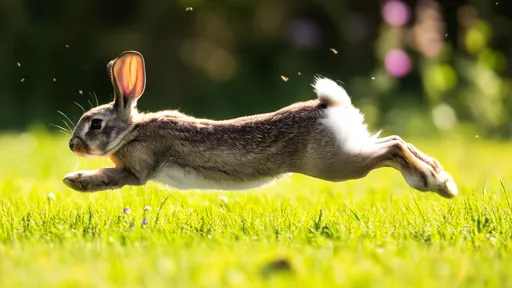
In the quiet hush of a meadow or the cozy corner of a home, a rabbit might be sitting peacefully one moment, and the next, it explodes into a frenzy of leaps, twists, and dashes. This behavior, often called a "binky," is one of the most joyful and puzzling displays in the animal kingdom. To the untrained eye, it might seem like a random burst of energy, but for those who understand rabbits, it's a clear sign of pure, unadulterated happiness. The sudden eruption of movement—ears flopping, body twisting mid-air, and legs kicking out—is a rabbit's way of expressing delight and contentment, a physical manifestation of its emotional state.
Animal

Totoro's Unique Hair Care Secret: Bathing in Volcanic Ash

By /Sep 10, 2025

In the lush, high-altitude forests of the Andes Mountains, a small, furry creature engages in a grooming ritual that has fascinated naturalists for centuries. The chinchilla, often affectionately called the "mountain rabbit" or known by its popular culture nickname "dragon cat," does not bathe in water like many mammals. Instead, it rolls and writhes in fine, powdery volcanic ash, a behavior that is not merely quirky but essential to its survival. This unique practice, evolved over millennia, holds secrets to impeccable fur maintenance that even the beauty industry has taken note of.
Animal

Parrots Mimicking Speech: Do They Really Understand What They're Saying?

By /Sep 10, 2025

For centuries, the uncanny ability of parrots to mimic human speech has captivated and mystified us. From pirate tales to pet shops, these colorful birds have long been associated with the playful, if somewhat mindless, repetition of words and phrases. The classic image is of a bird squawking "Polly wants a cracker!" with no deeper comprehension of the request. This has led to the common perception that parrots are mere feathered recording devices, brilliantly programmed for sound but devoid of understanding. The phrase "parroting" itself has entered our lexicon as a synonym for mindless repetition. But is this centuries-old assumption actually true? A growing body of scientific research suggests we have profoundly underestimated the avian brain, forcing us to re-examine the age-old question: Do parrots truly understand what they are saying?
Animal

Hamsters Stuff Their Cheeks with Food: Their Portable Granaries

By /Sep 10, 2025

In the quiet corners of many homes, a small creature engages in one of nature's most endearing and practical behaviors: the hamster, with its adorably distended cheeks, becomes a living, breathing pantry. These tiny rodents, often no larger than the palm of a hand, possess an extraordinary ability to transport food in quantities that seem to defy their size. Their cheek pouches, stretching from mouth to shoulders, serve as mobile storage units, allowing them to gather and hoard sustenance with remarkable efficiency. This behavior is not merely a quirky trait but a critical survival mechanism honed by evolution, reflecting the harsh realities of their natural habitats where resources are scarce and competition is fierce.
Animal

Is Cat Kneading a Habit Developed from Childhood or a Sign of Seeing You as Mom?

By /Sep 10, 2025

There is something deeply comforting about the rhythmic motion of a cat kneading against a soft blanket or even your lap. This behavior, often referred to as "making biscuits" or "kneading," is a common feline activity that many cat owners observe with affection and curiosity. But what lies behind this seemingly simple action? Is it a habit formed in kittenhood, or is it a sign that your cat sees you as its mother? The answers are woven into the complex tapestry of feline instincts, early development, and social bonding.
Animal

Is the Dog's Head Tilt Really a Cute Gesture? An Attempt at Coordinating Auditory and Visual Perception"

By /Sep 10, 2025

If you've ever spent time around dogs, you've likely witnessed the classic head tilt—that adorable, quizzical cock of the head that seems to say, "I'm listening" or "I'm trying to understand." Often dubbed the "head tilt" or "canine head cock," this behavior is so endearing that it's frequently interpreted as a deliberate attempt to be cute, hence the term "head tilt kill" in Chinese pop culture. But is this charming gesture truly a calculated display of canine charm, or is there more beneath the surface? As it turns out, science suggests that the head tilt is far from mere theatrics; it's a complex behavior rooted in sensory processing, communication, and cognitive function.
Animal

The Bee's 8-Figure Dance: How Dance Language Guides the Direction of Nectar Sources

By /Sep 10, 2025

In the intricate world of honeybees, communication transcends simple signals and enters the realm of sophisticated dance. Among the most fascinating behaviors observed in apian societies is the famed "waggle dance," often referred to as the figure-eight dance due to its distinctive pattern. This dance is not merely a random display but a precise method through which forager bees convey critical information about the location of rich food sources to their hive mates. The discovery of this behavior, largely credited to Nobel laureate Karl von Frisch, unveiled a complex language that operates on principles of angle, duration, and vigor, enabling the colony to thrive through collective effort.
Animal

Owl's Asymmetrical Ears: The Evolutionary Marvel for Precise Prey Location

By /Sep 10, 2025

In the quiet of the night, as most creatures retreat to the safety of their nests, the owl takes to the skies. Its flight is silent, a whisper on the wind, and its eyes pierce the darkness with an almost supernatural clarity. But perhaps the most remarkable of the owl’s adaptations lies not in its wings or its eyes, but in something far more subtle: its ears. Unlike any other bird, many species of owl possess ears that are asymmetrical—one ear opening higher than the other, often differing in size and shape as well. This peculiar feature is no evolutionary accident; it is a masterpiece of biological engineering, allowing the owl to pinpoint the exact location of its prey with astonishing precision, even in complete darkness.
Animal

Penguin Stone Theft: The Real Estate Battle in the Animal Kingdom

By /Sep 10, 2025

In the vast and icy landscapes of Antarctica, a peculiar real estate drama unfolds, one that involves tuxedo-clad residents with a penchant for property theft. Penguins, those beloved icons of resilience in the harsh polar environment, engage in a behavior that might seem charmingly mischievous at first glance but reveals a deeper struggle for survival and reproductive success: the pilfering of stones from each other’s nests.
Animal

How Do Hedgehogs Mate? The Sweet Trouble of Being Covered in Spines

By /Sep 10, 2025

In the quiet, moonlit corners of gardens and forests, a peculiar and delicate dance unfolds. It is the dance of the hedgehog, a creature whose very anatomy seems to defy the possibility of intimacy. How do these spiny mammals, adorned with a formidable coat of sharp quills, manage to come together in the act of procreation? The answer is a fascinating tale of evolution, patience, and an almost poetic negotiation between two prickly partners.
Animal

Why Do Rabbits Hop High? The Ultimate Expression of Joy

By /Sep 10, 2025

In the quiet moments of dawn or the fading light of dusk, if you are fortunate enough to witness a rabbit in its element, you may be treated to one of nature’s most delightful displays: the sudden, explosive leap known as a "binky." This isn’t merely a hop or a skip; it’s a full-bodied, acrobatic burst of motion—a twist, a kick, a mid-air jig that defies gravity and logic. To the casual observer, it might seem like a random spasm or a fit of energy, but to those who understand the language of lagomorphs, it is something far more profound: the pure, unadulterated expression of joy.
Animal

Turtles Breathe with Their Butts? The Unique Respiratory Function of the Cloaca

By /Sep 10, 2025

In the vast tapestry of the animal kingdom, few adaptations are as peculiar and fascinating as the ability of certain turtle species to breathe through their rear ends. This biological marvel, scientifically known as cloacal respiration, challenges conventional understanding of respiratory systems and showcases evolution’s boundless creativity. While most animals rely on lungs, gills, or skin for gas exchange, some turtles have turned their cloaca—a multifunctional orifice—into a secondary breathing apparatus. This phenomenon isn’t just a quirky footnote in biology; it’s a critical survival strategy that allows these creatures to thrive in environments where oxygen is scarce.
Animal

Multiple Ways Birds Bathe: Water Baths, Sand Baths, and Ant Baths

By /Sep 10, 2025

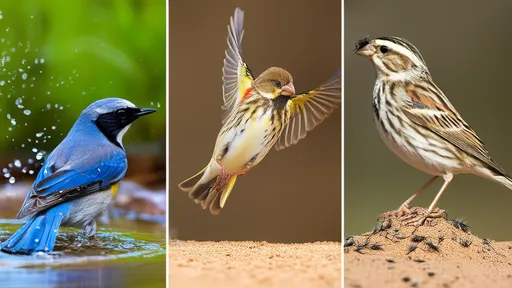
Birds are among nature's most fascinating creatures, not only for their ability to fly but also for their intricate and diverse grooming habits. While many of us are familiar with the sight of a bird splashing in a puddle or birdbath, fewer realize that bathing is a critical part of avian life, serving purposes far beyond mere cleanliness. From water baths to dust baths and even the peculiar practice of anting, birds employ a variety of methods to maintain their plumage, health, and overall well-being. These rituals are as varied as the species themselves, each adapted to their environment, physiology, and unique challenges.
Animal

How Do Squirrels Remember Thousands of Food Storage Locations? Experts on Memory Palaces

By /Sep 10, 2025

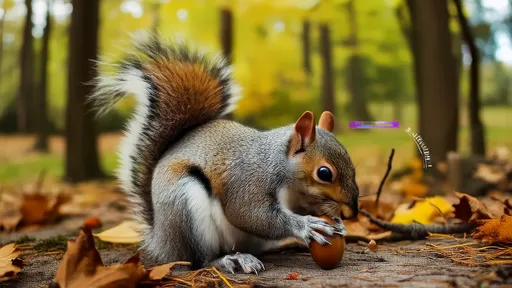
In the quiet corners of forests and urban parks, a remarkable cognitive feat unfolds each autumn as squirrels meticulously bury thousands of nuts and seeds. For centuries, observers assumed these scatter-hoarding rodents simply relied on luck or scent to recover their winter stash. Modern research, however, reveals a far more sophisticated system—one that rivals the memory techniques championed by ancient scholars and mental athletes. The humble squirrel, it turns out, is a natural master of the method of loci, commonly known as the memory palace technique.
Animal

Why Do Cats Like to Crawl into Boxes? The Scientific Explanation Behind the Sense of Security

By /Sep 10, 2025

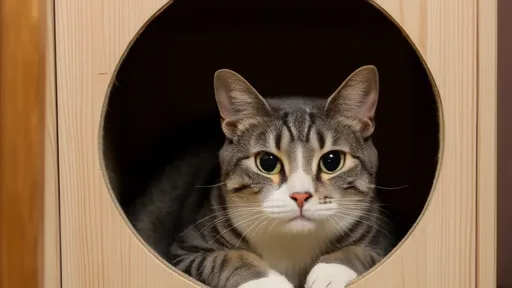
Anyone who has shared their home with a feline friend has witnessed the peculiar yet universal phenomenon: a cat’s irresistible attraction to boxes. A new Amazon delivery arrives, and before the contents are even unpacked, the resident cat has already claimed the cardboard container as its own. This behavior transcends breed, age, and environment, from pampered house pets to cats in shelter facilities. While it often appears as a simple, quirky habit, the underlying reasons are deeply rooted in feline psychology, evolutionary biology, and fundamental needs for security and survival. The humble cardboard box is far more than a toy; for a cat, it is a fortress, a strategic observatory, and a sanctuary of comfort.
Animal

Why Do Dogs Circle Before Pooping? A Navigational Behavior Left by Ancestors

By /Sep 10, 2025

Have you ever watched your dog intently circle a spot before finally settling down to do its business? This seemingly quirky pre-potty ritual is far from random. It's a deeply ingrained behavior passed down through generations, a canine compass calibration of sorts that connects our domesticated companions to their wild ancestors.