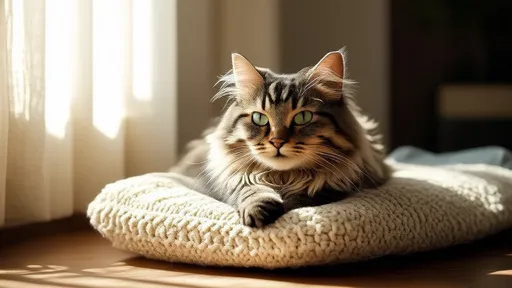
There is something deeply comforting about the rhythmic motion of a cat kneading against a soft blanket or even your lap. This behavior, often referred to as "making biscuits" or "kneading," is a common feline activity that many cat owners observe with affection and curiosity. But what lies behind this seemingly simple action? Is it a habit formed in kittenhood, or is it a sign that your cat sees you as its mother? The answers are woven into the complex tapestry of feline instincts, early development, and social bonding.
From the moment they are born, kittens engage in kneading as a vital survival behavior. When nursing, they press their paws against their mother’s mammary glands to stimulate milk flow. This motion is not just functional; it is also deeply comforting. The act is associated with warmth, safety, and nourishment—the very essence of maternal care. For a kitten, kneading is an instinctual behavior that is reinforced by positive outcomes: a full belly and the soothing presence of its mother. As cats grow into adulthood, many continue to exhibit this behavior, suggesting that the habit is deeply ingrained from their earliest days.
However, the persistence of kneading into adulthood raises interesting questions about its emotional significance. When your cat kneads on your lap or a soft surface, it often appears relaxed and content—sometimes even purring loudly. This has led many to believe that the behavior is a throwback to kittenhood, a comforting habit that evokes feelings of security and warmth. In this context, kneading can be seen as a form of self-soothing, much like a child clutching a favorite blanket. It is a behavior that transcends its original purpose, becoming a lifelong source of comfort.
But there is another layer to this behavior: the social and emotional bond between cats and their human companions. Cats are known for their ability to form strong attachments to their owners, often displaying behaviors that are typically reserved for their feline family members. When a cat kneads on you, it might be expressing a sense of trust and affection that is remarkably similar to the bond between a kitten and its mother. The act of kneading releases endorphins in the cat’s brain, creating a sense of well-being, and when directed toward a human, it can be interpreted as a sign of deep familiarity and comfort.
Moreover, kneading is not solely about emotional bonding; it also has practical aspects rooted in feline biology. Cats have scent glands in their paw pads, and kneading is one way they mark their territory. By pressing their paws into a surface, they leave behind their scent, claiming it as their own. When your cat kneads you, it might be mingling its scent with yours, effectively marking you as part of its social group—a behavior that reinforces the idea of you as family. This territorial marking is a subtle yet powerful way for cats to communicate ownership and belonging.
Interestingly, not all cats knead, and the frequency and intensity of the behavior can vary widely among individuals. Some cats knead only when they are particularly relaxed or happy, while others may do it more frequently. Factors such as genetics, early life experiences, and overall temperament can influence whether a cat retains this behavior into adulthood. For example, cats who were weaned too early might knead more often as a way to compensate for the lost comfort of their mother’s presence. Conversely, cats who had a particularly nurturing upbringing might knead as a positive association with their kittenhood.
The context in which kneading occurs also provides clues about its meaning. Many cats knead before settling down to sleep, almost as if they are fluffing a pillow to create a comfortable spot. This behavior might be reminiscent of their wild ancestors, who kneaded grass or leaves to create a soft, safe resting place. In a domestic setting, the ritual of kneading serves a similar purpose: it is a way to create a sense of security and familiarity in their environment. When your cat kneads your lap, it is not only seeking physical comfort but also reinforcing its connection to you as a source of safety.
It is also worth considering the role of human response in reinforcing this behavior. When a cat kneads and its owner responds with petting, soothing words, or simply by allowing the behavior to continue, the cat learns that kneading is a positive way to interact with its human. This positive reinforcement can encourage the cat to knead more often, strengthening the bond between pet and owner. In this way, kneading becomes a mutually beneficial behavior: the cat enjoys the comfort and attention, and the owner enjoys the display of affection.
While kneading is generally a harmless and even endearing behavior, it can sometimes become problematic if the cat’s claws are sharp or if the kneading is overly vigorous. In such cases, providing alternative outlets for the behavior, such as a soft blanket or a dedicated kneading pad, can help protect both the owner and the furniture. Regularly trimming the cat’s claws or using soft nail caps can also mitigate any discomfort without discouraging the behavior entirely. Understanding why cats knead can help owners respond in ways that nurture the bond while maintaining harmony in the household.
In conclusion, kneading is a multifaceted behavior that blends instinct, memory, and emotion. It is a habit born in kittenhood, rooted in the need for nourishment and comfort, but it evolves into a lifelong expression of contentment and trust. When your cat kneads you, it is likely drawing on deep-seated instincts while also acknowledging you as a source of safety and affection—a figure akin to a mother in its world. This behavior is a beautiful reminder of the enduring connections between humans and their feline companions, connections built on mutual trust and comfort.
So the next time your cat settles onto your lap and begins to knead, take a moment to appreciate the complexity of this simple action. It is not just a habit; it is a testament to the enduring bonds of love and trust that define your relationship with your pet. Whether seen as a throwback to kittenhood or a sign that you are considered family, kneading is one of the many ways cats communicate their feelings and enrich our lives with their unique personalities.
By /Sep 10, 2025
By /Sep 10, 2025

By /Sep 10, 2025
By /Sep 10, 2025
By /Sep 10, 2025

By /Sep 10, 2025
By /Sep 10, 2025

By /Sep 10, 2025
By /Sep 10, 2025

By /Sep 10, 2025
By /Sep 10, 2025

By /Sep 10, 2025

By /Sep 10, 2025

By /Sep 10, 2025
By /Sep 10, 2025

By /Sep 10, 2025
By /Sep 10, 2025
By /Sep 10, 2025
By /Sep 10, 2025

By /Sep 10, 2025