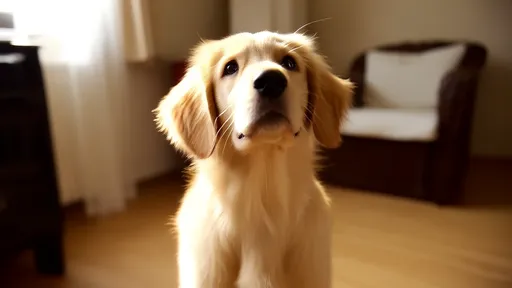
Have you ever watched your dog intently circle a spot before finally settling down to do its business? This seemingly quirky pre-potty ritual is far from random. It's a deeply ingrained behavior passed down through generations, a canine compass calibration of sorts that connects our domesticated companions to their wild ancestors.
While it might appear to us as mere canine quirkiness, this circling ritual is believed to be a sophisticated navigational strategy. The prevailing theory among animal behaviorists suggests that dogs are aligning themselves with the Earth's magnetic field. By spinning and sniffing, they are essentially finding their "true north," creating a mental map oriented to the planet's magnetic poles. This act of alignment provides a fixed reference point in their environment, a constant in a world of variables.
This behavior is a powerful echo of their ancestral past. Before they were our couch companions, dogs' predecessors were wild canines like wolves. In the wild, efficient navigation is not a matter of convenience but one of survival. A successful hunt, the return to a den, or the avoidance of rival territories all depended on a precise understanding of one's location and direction. Circling to defecate or urinate wasn't just about finding a comfortable spot; it was about leaving a critical navigational marker for themselves and their pack.
The act itself is a multi-sensory process. As a dog circles, it is pressing down grass and underbrush, creating a cleared, "safe" area. This minimizes the chance of soiling their own fur or stepping in something unpleasant, but the function runs deeper. The physical disturbance of the ground releases a cocktail of scents from the crushed vegetation and disturbed soil. These odors provide a rich data set about which other animals have recently passed through, adding another layer of information to their mental chart.
Furthermore, the raised leg or the specific squatting position during elimination is about message placement, not just waste disposal. By choosing a specific orientation and location, a dog is ensuring its scent signature is positioned for optimal dispersal by wind and for maximum detectability by other canines. It's the difference between scribbling a note on a random piece of paper and posting a billboard on a well-traveled road. The circling ensures the "billboard" is facing the right direction for the intended audience.
This ritual also serves a crucial communicative purpose. Dogs possess incredibly powerful olfactory senses, and their waste is a potent chemical message board. It contains a wealth of information about the individual—its health, diet, reproductive status, and even its emotional state. By carefully orienting this scent marker, a dog is not just saying, "I was here." It is broadcasting a detailed profile of itself to any other dog that might come across the spot. The alignment with the magnetic field may help standardize these "posts," making them easier for others to locate and interpret within a shared, magnetically-calibrated mapping system.
So, the next time you see your dog embarking on its pre-potty pirouette, pause and appreciate the complexity of the performance. You are witnessing a ancient ritual, a seamless blend of navigation, communication, and instinct. It is a moment where the domesticated pet momentarily taps into the wild, savvy creature that still resides within, using the invisible forces of the planet to leave its mark on the world.
By /Sep 10, 2025
By /Sep 10, 2025

By /Sep 10, 2025
By /Sep 10, 2025
By /Sep 10, 2025

By /Sep 10, 2025
By /Sep 10, 2025

By /Sep 10, 2025

By /Sep 10, 2025
By /Sep 10, 2025

By /Sep 10, 2025

By /Sep 10, 2025

By /Sep 10, 2025

By /Sep 10, 2025
By /Sep 10, 2025

By /Sep 10, 2025

By /Sep 10, 2025
By /Sep 10, 2025
By /Sep 10, 2025
By /Sep 10, 2025