In the intricate world of honeybees, communication transcends simple signals and enters the realm of sophisticated dance. Among the most fascinating behaviors observed in apian societies is the famed "waggle dance," often referred to as the figure-eight dance due to its distinctive pattern. This dance is not merely a random display but a precise method through which forager bees convey critical information about the location of rich food sources to their hive mates. The discovery of this behavior, largely credited to Nobel laureate Karl von Frisch, unveiled a complex language that operates on principles of angle, duration, and vigor, enabling the colony to thrive through collective effort.
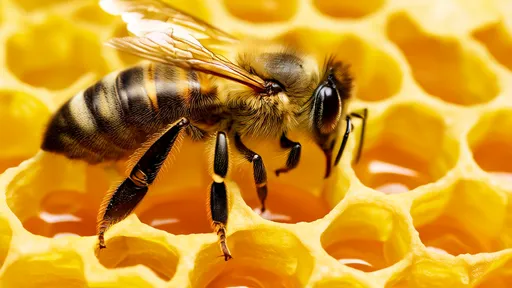
The waggle dance is performed on the vertical surface of the honeycomb within the darkness of the hive, where visual cues are limited. A returning forager bee that has found a valuable source of nectar or pollen will initiate this dance to share the details. The dance consists of a series of movements forming a figure-eight pattern: a straight run accompanied by a vigorous waggle of the abdomen, followed by a return loop to the starting point, repeated multiple times. The orientation and duration of the waggle run are the key elements that encode the direction and distance to the food source, respectively.
To understand how direction is communicated, one must consider the hive's frame of reference. The angle of the waggle run relative to the vertical axis on the honeycomb corresponds directly to the angle between the sun and the food source outside. For instance, if a bee dances with the waggle run oriented straight upward, it indicates that the food is located in the direction of the sun. If the run is angled 60 degrees to the right of vertical, it means the food source is 60 degrees to the right of the sun's position. This celestial navigation allows bees to translate a dance performed in the dark into accurate flight directions in the bright outdoors.
Distance to the resource is conveyed through the duration of the waggle phase during the straight run. A longer waggle signifies a greater distance to the food source. Research has shown that each second of waggling roughly corresponds to an additional kilometer of distance, though this can vary slightly among different bee subspecies. The intensity of the waggle and the number of dance repetitions also reflect the quality of the food source; a more enthusiastic dance with multiple cycles suggests a highly rewarding patch of flowers, thereby motivating more bees to forage there.
The efficiency of this dance language is remarkable, enabling the hive to deploy foragers precisely where they are needed without unnecessary exploration. This minimizes energy expenditure and maximizes resource collection, which is crucial for the colony's survival, especially in environments where floral resources are sparse or scattered. The dance's accuracy is such that it can direct bees to locations several kilometers away with minimal error, a testament to the evolutionary refinement of this communication system.
Interestingly, the waggle dance is not static; it adapts to environmental conditions. On cloudy days when the sun is obscured, bees rely on polarized light patterns in the sky, which they can detect even through thin cloud cover, to maintain their bearings. Moreover, the dance incorporates information about wind conditions and landmarks, though these are believed to be secondary cues. The primary reliance on the sun's position ensures consistency and reliability across different terrains and times of day.
This form of communication also highlights the social cohesion of the hive. Bees that attend the dance do not merely observe; they follow the dancer closely, antennating and interacting to grasp the message fully. They then decode the information and use it to navigate to the specified location. This transfer of knowledge is vital for the colony's foraging efficiency and exemplifies how collective intelligence operates in insect societies.
Despite its sophistication, the waggle dance has limitations. It is most effective for sources at intermediate distances; very close or extremely far sources are communicated through simpler forms, such as the round dance for nearby resources. Additionally, errors can occur, especially if the sun's position changes rapidly, but the system's redundancy—multiple bees often corroborate information—helps mitigate inaccuracies.
The study of the bee's dance language has not only illuminated the complexities of animal behavior but also inspired advancements in robotics and algorithms. Researchers have modeled the dance's principles to improve swarm robotics, where agents communicate to optimize resource allocation. This bio-inspired approach demonstrates how nature's solutions can inform human technology.
In conclusion, the waggle dance of honeybees is a profound example of non-human language, encoding spatial information with elegance and precision. It enables a colony of thousands to act as a unified, efficient foraging entity. As we continue to decode the nuances of this behavior, we gain deeper insights into the evolution of communication and the remarkable capabilities of these essential pollinators.

By /Sep 10, 2025
By /Sep 10, 2025

By /Sep 10, 2025
By /Sep 10, 2025
By /Sep 10, 2025
By /Sep 10, 2025
By /Sep 10, 2025

By /Sep 10, 2025

By /Sep 10, 2025
By /Sep 10, 2025
By /Sep 10, 2025
By /Sep 10, 2025
By /Sep 10, 2025
By /Sep 10, 2025
By /Sep 10, 2025

By /Sep 10, 2025
By /Sep 10, 2025
By /Sep 10, 2025
By /Sep 10, 2025
By /Sep 10, 2025