Anyone who has shared their home with a feline friend has witnessed the peculiar yet universal phenomenon: a cat’s irresistible attraction to boxes. A new Amazon delivery arrives, and before the contents are even unpacked, the resident cat has already claimed the cardboard container as its own. This behavior transcends breed, age, and environment, from pampered house pets to cats in shelter facilities. While it often appears as a simple, quirky habit, the underlying reasons are deeply rooted in feline psychology, evolutionary biology, and fundamental needs for security and survival. The humble cardboard box is far more than a toy; for a cat, it is a fortress, a strategic observatory, and a sanctuary of comfort.
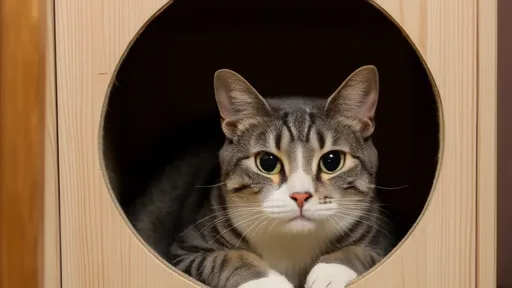
The most compelling explanation for this box-seeking behavior is the powerful sense of security and stress relief it provides. Cats, despite their domesticated status, are both predators and prey animals in the wild. This dual role creates an inherent conflict between the instinct to hunt and the need to avoid being hunted. Open spaces are fraught with perceived danger—they offer nowhere to hide from potential threats. A box, with its enclosed walls and single entrance, creates a defined, manageable space where a cat can retreat, observe its surroundings without being seen, and feel protected from ambush. This is not merely anthropomorphic speculation; scientific research supports this claim.
A notable study conducted at Utrecht University in the Netherlands provided empirical evidence for the stress-reducing properties of boxes. Researchers in a Dutch animal shelter divided newly arrived cats into two groups: one group was provided with hiding boxes, while the other was not. They closely monitored the cats' stress levels using established behavioral markers. The results were striking. The cats with access to boxes showed significantly lower stress levels almost immediately. They adapted to their new environment more quickly, were more willing to interact with humans, and were generally less fearful than their box-less counterparts. For these cats, the box was a crucial coping mechanism in a terrifyingly unfamiliar situation, offering a safe haven where they could process new scents and sounds at their own pace.
Beyond psychological comfort, the behavior is also a matter of thermoregulation and energy conservation. The domestic cat's thermoneutral zone—the ambient temperature range where it does not have to expend energy to maintain its body heat—is considerably higher than that of humans, between 86°F and 97°F (30°C and 36°C). Most homes are kept cooler than this, typically around 68°F to 72°F (20°C to 22°C). This means our homes are perpetually chilly from a cat's perspective. Cardboard is a fantastic insulator. Curling up in a small, enclosed space allows a cat to retain its body heat efficiently, minimizing caloric expenditure. This desire to conserve energy is a vestige of their wild ancestors, for whom hunting was an energy-intensive activity with no guaranteed success. Conserving energy between hunts was a matter of life and death, and the modern house cat has retained this efficient instinct, often sleeping for up to 18 hours a day in warm, secluded spots.
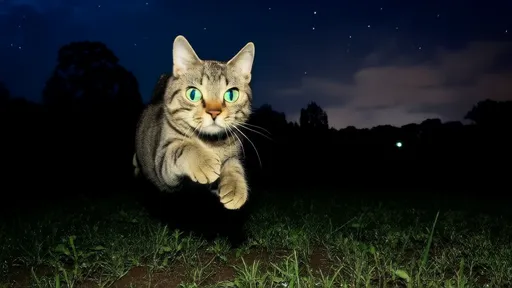
There is also a distinct hunting and ambush advantage to utilizing a box. From a tactical standpoint, a box is the perfect blind. Its walls conceal a cat's presence, allowing it to monitor the activity in a room—be it a toy, another pet, or a human—completely undetected. This satisfies its deep-seated predatory sequence: stalk, pounce, capture. Even in the absence of actual prey, the box provides an ideal launchpad for playful attacks, fulfilling a natural behavioral need. This strategic use of space demonstrates that the behavior is not purely passive or defensive; it is also an expression of the cat's innate predatory nature. It allows them to engage with their environment on their own terms, from a position of power and concealment.
Furthermore, this attraction to enclosed spaces highlights a critical aspect of feline environmental enrichment. In the wild, a cat's territory is complex and three-dimensional, featuring high perches, dense brush, and hidden burrows. The average human home, with its open floors and sparse furniture, can be stark and unstimulating by comparison. A simple cardboard box instantly adds a new layer of complexity to this environment. It creates a novel object to investigate, a new territory to claim, and a private retreat. For indoor cats especially, such environmental enrichment is vital for preventing boredom, anxiety, and associated problem behaviors. It provides necessary mental stimulation and a sense of control over their surroundings, which is fundamental to their well-being.
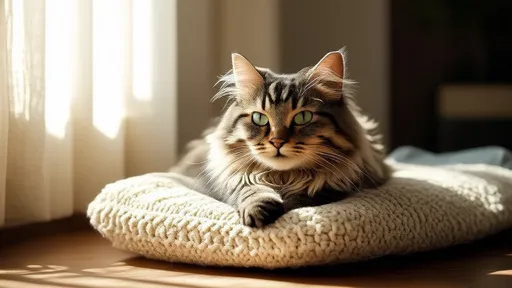
Ultimately, the common cardboard box satisfies a multitude of a cat's most fundamental needs all at once. It is a fortress that satisfies the evolutionary imperative for safety from predators. It is a strategic command post that enables its natural ambush predation tactics. It is a warm, energy-efficient pod that aids in thermoregulation. And finally, it is a simple and effective tool for environmental enrichment, combating the stress and monotony of domestic life. The next time your cat forsakes an expensive, plush bed for an empty shipping container, understand that it is not a rejection of your gift but an expression of its deepest instincts. That plain box is, in every sense that matters to a cat, a perfect piece of furniture.
By /Sep 10, 2025
By /Sep 10, 2025

By /Sep 10, 2025
By /Sep 10, 2025

By /Sep 10, 2025

By /Sep 10, 2025
By /Sep 10, 2025

By /Sep 10, 2025
By /Sep 10, 2025

By /Sep 10, 2025
By /Sep 10, 2025
By /Sep 10, 2025

By /Sep 10, 2025
By /Sep 10, 2025

By /Sep 10, 2025

By /Sep 10, 2025

By /Sep 10, 2025
By /Sep 10, 2025
By /Sep 10, 2025

By /Sep 10, 2025