Nestled within the heart of every Pomeranian is the spirit of a much larger dog, a legacy from their sturdy Spitz ancestors. This bold personality, combined with their luxurious double coat, makes them utterly captivating companions. However, these very traits—the voluminous fur and the vocal nature—present the most significant challenges for their owners. Mastering the art of their care is not merely about maintenance; it's about understanding and harmonizing with their unique canine essence. A well-groomed and content Pomeranian is not just a pretty face; it is a testament to a deep and respectful bond between human and dog.
The Pomeranian's magnificent coat is its crowning glory, a complex system designed for both insulation and protection. This double coat consists of two distinct layers, each with a critical function. The dense, soft, and short undercoat acts as a remarkable insulator, trapping a layer of air close to the skin to keep the dog warm in winter and surprisingly cool in summer. The long, harsh, and straight guard hairs that form the outer coat serve as a shield, repelling dirt, moisture, and UV rays. This intricate design means that their coat is almost always in a state of flux, responding to changes in daylight and temperature, which dictates a grooming routine that is both consistent and adaptable.
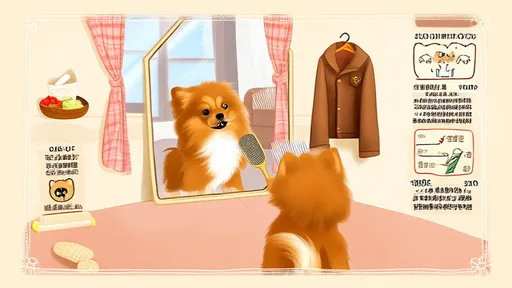
To manage this dynamic coat, daily brushing is not an overzealous recommendation; it is an absolute necessity. A pin brush or a slicker brush is ideal for navigating the dense undercoat without causing discomfort. The goal of this daily ritual is twofold: to prevent the formation of painful mats and tangles, which can quickly escalate from a minor nuisance to a severe skin issue, and to distribute the skin's natural oils throughout the fur, giving it that characteristic healthy sheen. This process should be gentle and thorough, starting from the skin and brushing outward in the direction of hair growth. Pay special attention to high-friction areas like behind the ears, under the legs, and around the collar, where mats love to form.
Beyond the daily brush, a more intensive grooming session should be scheduled weekly. This is the time to employ a metal comb to meticulously check for and tease out any smaller knots that the brush might have missed. This is also the prime opportunity to inspect the skin for any abnormalities—redness, dryness, or parasites. Many owners find that a light spritz of a detangling spray or even a fine mist of water can make this process smoother and more effective. It transforms the task from a chore into a bonding session, a quiet time where your Pom learns to trust your touch completely.
Bathing your Pomeranian is a procedure that requires a delicate balance. Too frequent, and you risk stripping the coat of its essential oils, leading to dry, itchy skin and a brittle, dull outer coat. Too infrequent, and dirt and dander can build up, causing odor and potential skin infections. A bath every three to four weeks is generally a good rule of thumb, unless they've had a particularly muddy adventure. The choice of shampoo is paramount; it must be a high-quality, dog-specific formula, ideally one designed for double-coated breeds or for sensitive skin. Human shampoos are far too harsh and will disrupt the pH balance of their skin. The process involves a thorough pre-brushing to eliminate any loose hair and tangles, a complete rinse to ensure no soap residue remains (a common cause of irritation), and a careful, low-heat drying process. Never put a damp Pomeranian down; their dense coat can hold moisture close to the skin for hours, creating a breeding ground for mildew and bacteria.
Seasonal changes bring about the most dramatic shifts in your Pomeranian's coat: the infamous "blow." Typically occurring in the spring and fall, this is a period where the undercoat sheds en masse to make way for a new season-appropriate coat. During these times, which can last for several weeks, your daily brushing routine will need to be intensified. You will be amazed at the sheer volume of soft, downy undercoat that comes out. Tools like an undercoat rake or a de-shedding tool become invaluable allies during this period, helping to remove the dead hair efficiently and speed up the process. Without this intervention, the loose hair will not only cover your home in a layer of fluff but will also form mats against the skin with startling speed.
While their coat is a physical marvel, the Pomeranian's voice is the instrument of their formidable spirit. Their tendency to bark is not a design flaw; it is deeply ingrained in their DNA. Bred down from larger working dogs used for herding and guarding, alerting their owners to anything unusual was a primary job. This instinct to vocalize remains potent in the modern Pom. They bark to alert you to a passing car, a ringing doorbell, a squirrel in the yard, or a leaf blowing in the wind. They bark out of excitement, boredom, anxiety, or simply to hear their own voice. Understanding the why behind the bark is the first and most crucial step in managing it.
The absolute worst thing you can do in response to excessive barking is to yell. To a dog, yelling is not a reprimand; it is you joining in. You are effectively barking along with them, validating their concern and amplifying the behavior. The key to curbing this instinct is a combination of redirection, positive reinforcement, and consistent training. The moment your Pom begins to bark at a trigger, redirect their attention. Ask for a simple command they know well, like "sit" or "look at me." The act of complying with a known command forces a cognitive shift, pulling them out of their reactive state. The instant they stop barking and obey, reward them lavishly with a high-value treat and enthusiastic praise. You are not rewarding the bark; you are rewarding the silence and the compliance that followed it.
For alert barking specifically, a powerful technique is to thank them for the alert and then give a release cue. When they bark at the door, calmly say, "Thank you, I've got it," or "All done." Then ask them to go to their bed or mat. This acknowledges their natural instinct—they did their job—and then gives them a new, incompatible job (staying on their bed). This satisfies their need to be helpful while discouraging a prolonged barking fit. It transforms a potential nuisance into a structured interaction.
Often, a barking Pomeranian is simply a bored Pomeranian. These are intelligent, energetic animals whose minds need as much exercise as their bodies. A significant amount of barking can be preempted by providing adequate physical exercise through daily walks and play, coupled with mental stimulation. Food puzzle toys, obedience training sessions, learning new tricks, or even a game of hide-and-seek with treats engage their brain and tire them out in a way that a walk alone often cannot't. A mentally exhausted dog is far less likely to bark at every little stimulus; they would rather take a nap.
In some cases, particularly with barking driven by separation anxiety or deep-seated fear, the guidance of a professional dog trainer or a veterinary behaviorist is essential. They can help you design a tailored behavior modification plan that addresses the root emotional cause of the barking, rather than just treating the symptom. This is a proactive and compassionate approach to ensuring your dog's emotional well-being.
Caring for a Pomeranian is a journey of embracing contrasts. It is about tending to the opulent, high-maintenance coat that belies their tough, spirited interior. It is about listening to and then gently guiding their vocal nature, respecting the alert dog within while teaching them the calm of a modern companion. This commitment to understanding both their physical and psychological needs is what forges an unbreakable bond. The reward for this dedicated care is not just a beautiful and well-behaved dog, but a profound relationship with a tiny creature whose heart and history are wonderfully, magnificently large.
By /Aug 20, 2025
By /Aug 20, 2025
By /Aug 20, 2025
By /Aug 20, 2025
By /Aug 20, 2025

By /Aug 20, 2025
By /Aug 20, 2025
By /Aug 20, 2025

By /Aug 20, 2025

By /Aug 20, 2025

By /Aug 20, 2025
By /Aug 20, 2025
By /Aug 20, 2025

By /Aug 20, 2025

By /Aug 20, 2025
By /Aug 20, 2025
By /Aug 20, 2025
By /Aug 20, 2025
By /Aug 20, 2025

By /Aug 20, 2025