In recent years, the integration of virtual reality (VR) technology into scientific research has expanded beyond human-centered applications, finding a particularly innovative niche in the study of animal behavior. Among these explorations, its use in pet behavior research stands out as a transformative approach, offering unprecedented insights into the minds and reactions of our domestic companions. This emerging field leverages immersive digital environments to observe, analyze, and understand behaviors in ways traditional methods simply cannot match, opening new frontiers in ethology and veterinary science.
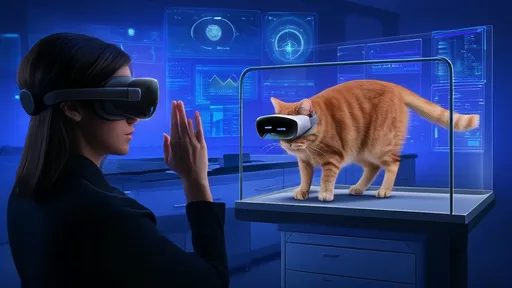
The core of this methodology involves creating controlled, customizable virtual scenarios that can simulate a vast array of stimuli and situations. Researchers can design environments ranging from a peaceful living room to a bustling park filled with virtual humans, other animals, or even auditory cues like doorbells or thunderstorms. The pet, often a dog or cat in these initial studies, is equipped with a specially designed, animal-friendly VR headset or is placed within a CAVE (Cave Automatic Virtual Environment) system, where projections surround the animal. Their physiological and behavioral responses—heart rate, eye movement, gait, vocalizations, and overall body language—are then meticulously recorded using synchronized sensors and cameras.
One of the most significant advantages this technology offers is the elimination of countless confounding variables present in real-world experiments. In a physical park, the weather, unexpected noises, the presence of unfamiliar animals or people, and even the researcher's own influence can skew results. VR allows for the creation of a perfectly repeatable and sterile experimental condition. A dog's reaction to a specific virtual stimulus, like a bouncing ball or an approaching, non-threatening avatar of another dog, can be tested hundreds of times with absolute consistency, allowing for a clarity of data that was previously unattainable. This precision is crucial for isolating the exact triggers of certain behaviors, from fear and anxiety to curiosity and playfulness.
Beyond basic observation, VR is proving instrumental in therapeutic and training applications. For pets suffering from anxiety disorders, phobias (such as fear of thunderstorms or vacuum cleaners), or past trauma, VR systems can be used for controlled exposure therapy. A veterinarian or animal behaviorist can gradually introduce the anxiety-inducing stimulus at a low, non-threatening intensity within the virtual space, slowly desensitizing the animal in a safe and controlled manner. The intensity, proximity, and nature of the stimulus can be modulated in real-time based on the animal's immediate reactions, something impossible to achieve safely in the real world. This promises a more effective and humane path to behavioral correction and improved welfare.
Furthermore, this technology provides a unique window into the cognitive processes of pets. By designing experiments that test problem-solving, memory, and sensory perception within VR environments, scientists are beginning to map how animals like dogs and cats perceive and interpret their world. For instance, experiments can alter the virtual laws of physics to see if an animal notices when a virtual object falls unnaturally or passes through a solid barrier. These studies probe the boundaries of animal intelligence and consciousness, asking profound questions about what they understand about permanence, causality, and reality itself.
However, the application of VR in pet behavior research is not without its substantial challenges and ethical considerations. The primary concern is animal welfare; it is paramount to ensure that the experience is not stressful, disorienting, or harmful. Researchers must be vigilant for signs of cyber-sickness (the animal equivalent of motion sickness) or excessive distress. The equipment must be adapted for animal anatomy and comfort, which requires specialized design. The ethical framework demands that any study's potential benefits to animal understanding and welfare must significantly outweigh any temporary discomfort, with a strong emphasis on positive reinforcement and an immediate cessation protocol if an animal shows signs of being overly stressed.
Looking ahead, the potential for VR in this field is boundless. As the technology becomes more sophisticated, affordable, and refined for animal use, we can anticipate its adoption by veterinary practices, animal training facilities, and even pet product companies. Future applications might include more nuanced social simulations to study inter-species communication or highly detailed environments to test new pet-friendly architectural designs. The data harvested from these virtual interactions will not only deepen our bond with pets by helping us understand them better but also drive innovations in how we care for them, train them, and ensure their emotional and psychological well-being in an increasingly human-centric world.
In conclusion, the marriage of virtual reality technology and pet behavior research represents a paradigm shift in comparative psychology and veterinary medicine. By constructing digital worlds, scientists are gaining cleaner data, developing novel therapies, and asking deeper questions about animal cognition. While navigating this new territory requires careful ethical stewardship, the rewards are a more profound, empirically grounded understanding of the animals that share our homes and lives. This is more than just a technological novelty; it is a powerful tool forging a path toward a future where we can truly see the world through our pets' eyes.

By /Aug 20, 2025

By /Aug 20, 2025

By /Aug 20, 2025

By /Aug 20, 2025

By /Aug 20, 2025
By /Aug 20, 2025

By /Aug 20, 2025

By /Aug 20, 2025

By /Aug 20, 2025

By /Aug 20, 2025

By /Aug 20, 2025

By /Aug 20, 2025

By /Aug 20, 2025

By /Aug 20, 2025

By /Aug 20, 2025

By /Aug 20, 2025

By /Aug 20, 2025

By /Aug 20, 2025

By /Aug 20, 2025

By /Aug 20, 2025